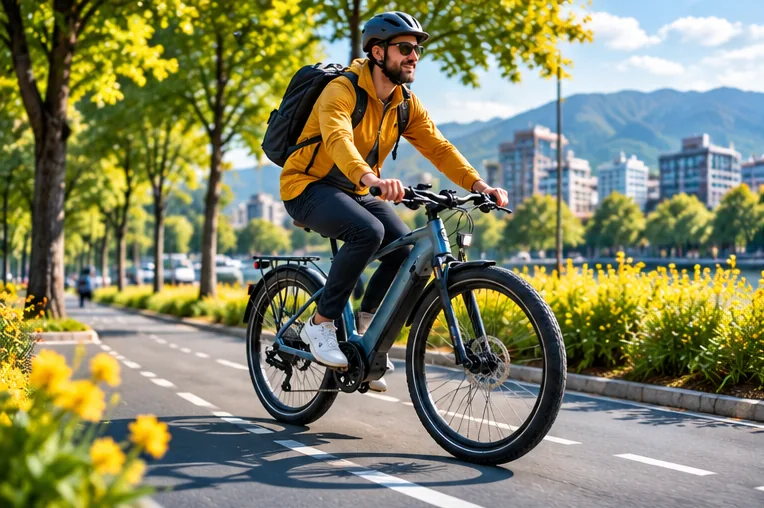
Compare fit, road comfort, weather readiness, charging logistics, service and battery reserves for a useful daily commuter.
Start with door-to-door time, not speed
A faster assist mode may save less time than expected when traffic lights, turns, crowded paths and parking account for much of the trip. Measure your real distance and allowed route rather than using a straight-line map.
On a commuting route, stable steering, braking and visibility can matter more than peak speed. Arrange a supervised test ride where possible and consider the bike's behavior while starting, stopping and maneuvering at low speed.
Weather-ready equipment is utility, not decoration
Integrated lights, fenders and a way to carry a bag without swinging weight from the handlebar are worth prioritizing. Inspect tire availability and puncture protection. Wet rides place more demands on braking, visibility and drivetrain care.
Check battery and display water-resistance claims carefully; water-resistant never means permission to pressure-wash. Follow the maker's rain and cleaning guidance, especially around charging connectors.
Solve parking, theft and charging before purchase
Where will you park at work and at home? Will a heavy e-bike have to be carried up stairs? Can you remove the battery for approved indoor charging? A bike that fits your route but not your building is not a successful purchase.
Use a high-quality lock appropriate to your risk, secure the frame and expensive components, and check insurance requirements. Some workplaces and buildings set battery-storage rules; ask before assuming you can charge there.
Size and support beat a one-time bargain
Compare reach, handlebar adjustability, standover and the maker's published rider-height or inseam range. Do not infer fit from the wheel diameter alone. Confirm how service works, where replacement brake components come from and whether local bike shops support the drive system.
If two bikes are close on price, the bike with accessible service, better fit and a suitable return policy may be the much better long-term value.
Before you decide
- Commuting route and charging locations are known.
- I can store the full bike and lift it if necessary.
- I checked fenders, lights, rack and lock compatibility.
- I checked local rider and bike-class rules.
Sources & further reading
Primary references are linked so you can check their meaning and updates.